Species Guides
Can You Find Sailfish Close to Fort Lauderdale?
By Nomad Fishing Charters | February 24, 2026 · 8 min read
Sailfish Minutes From the Dock
Fort Lauderdale isn't just a postcard destination with palm trees and yachts. It's sitting on top of some of the most productive sailfish water in the Atlantic. And we're not talking about a long haul offshore, but minutes from the dock.
The Gulf Stream runs close enough that you can see the city skyline while you're rigging baits. That proximity changes everything.
Most anglers assume they need to burn fuel for hours to reach blue water. Not here. The current brings the food chain right to your doorstep, and sailfish follow.
If you're serious about chasing bills without the marathon boat ride, this stretch of coast delivers. Just don't show up unprepared and expect the fish to do the work for you.
The Current Does the Heavy Lifting
The Gulf Stream isn't just a warm ribbon of water. It's a conveyor belt of baitfish, plankton, and everything that eats them. Sailfish ride that current like a highway, and when it swings close to shore, the action stacks up fast. This stretch of coast benefits from one of the tightest approaches of the Stream along the entire Florida coast.
That means you're not guessing where the fish are. You're fishing structure that's predictable, accessible, and loaded. The edge of the current creates temperature breaks and color changes that concentrate bait.
Sailfish patrol those zones, and when conditions align, you'll see them tailing on the surface in packs. It's not luck. It's geography working in your favor.
Winter Is When the Numbers Spike
Sailfish show up year-round, but the real surge happens between November and April. Cold fronts push bait south, and the sailfish migration follows. December through February is peak season, and it's not uncommon to raise a dozen fish in a single trip when the bite is on.
Cold snaps trigger what locals call sailfish showers. The fish stack up, feed aggressively, and put on a show. If you're planning a trip, aim for those months.
Outside that window, you can still find fish, but the consistency drops. Timing matters, and the winter window is when sailfish action earns its reputation across South Florida, including the waters off Sunny Isles Beach.
Live Bait on Kites Gets the Most Bites
There's a reason kite fishing dominates the sailfish scene here. It keeps your bait skipping on the surface, away from the boat, and in the strike zone. Sailfish are visual hunters, and a goggle eye or pilchard dancing on top is hard to ignore. Our live bait and kite fishing charters are built around exactly this presentation.
A few details make the difference. Goggle eyes and pilchards are the go-to baits for kite presentations, and threadfin herring work when the bite is hot and fish are less picky. Circle hooks increase hookup rates and make catch-and-release cleaner.
Teasers without hooks pull fish into the spread and create competition. Keeping tension on the kite line prevents tangles and keeps baits active.
Trolling Covers Water When Fish Are Scattered
Kites are deadly when fish are up and feeding, but trolling lets you search when the bite is slow. Rigged ballyhoo, skirted lures, and dredges all have their place. The key is covering the right depth and speed until you find active fish.
Trolling also lets you work multiple baits at once, increasing your odds. When you hook up, you can switch to live baiting and capitalize on the school. It's a flexible approach that works whether you're targeting sailfish specifically or mixing in other pelagics like mahi-mahi and kingfish.
Charters Know the Spots and the Setups
You can run your own boat and figure it out, but local captains have the advantage. They know where the current is running, what the bait is doing, and how to adjust when conditions shift. If you're visiting or new to sailfish, a charter is the fastest way to get on fish.
South Florida has no shortage of experienced crews. Most operate out of marinas within minutes of the fishing grounds, so you're not wasting half the day in transit. The best captains will put you on fish, teach you the techniques, and handle the details so you can focus on the fight. Browsing our charter options and rates helps you match a trip length to the kind of sailfish day you want.
Catch and Release Keeps the Fishery Strong
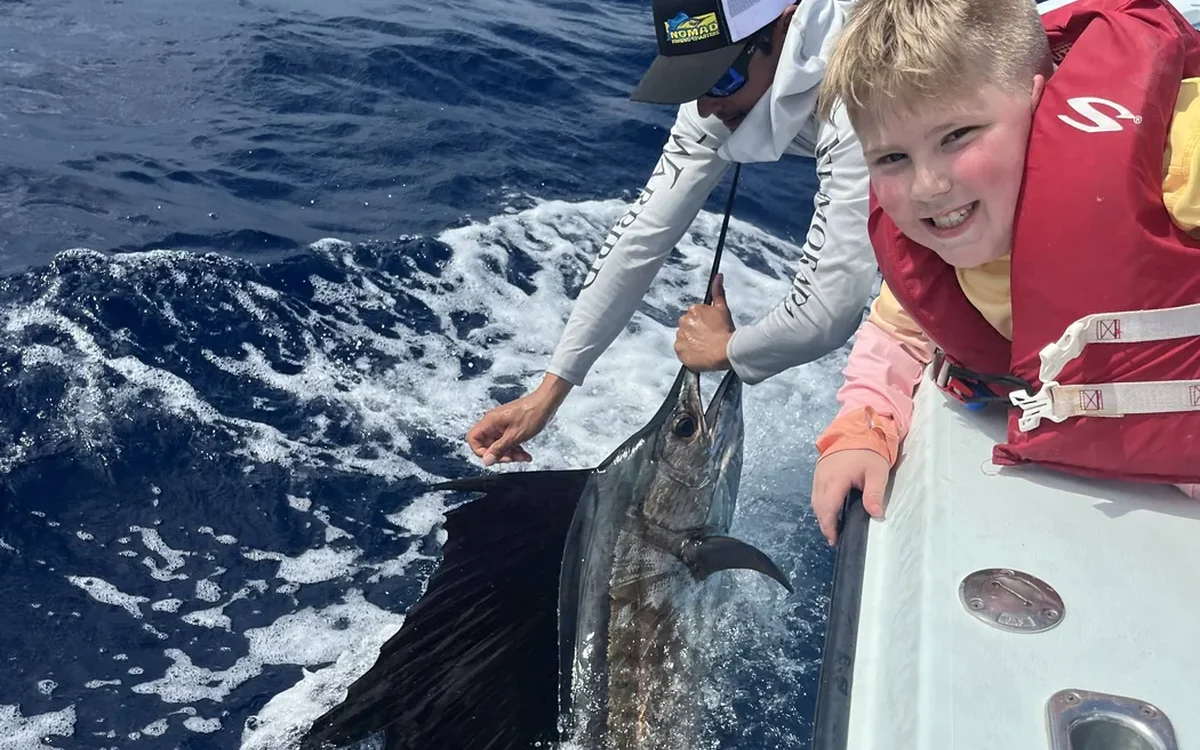
Sailfish aren't table fare, and most anglers release them. That's not just good ethics - it's smart management. Circle hooks, quick photos, and minimal handling all improve survival rates. The goal is to get the fish back in the water healthy and swimming strong.
If you're keeping score, most tournaments and captains count releases, not kills. The fishery stays healthy because anglers respect it. That's why this coast continues to produce year after year. Treat the resource right, and it keeps giving back.
Gear, Weather, and Why Proximity Isn't Easy
Sailfish aren't huge, but they're fast and acrobatic. Light tackle makes the fight more exciting, but you need enough backbone to control the fish. Most crews run spinning or conventional reels in the 20 to 30-pound class with fluorocarbon leaders in the 40 to 60-pound range. Pair that with circle hooks sized 5/0 to 7/0 and quality drag systems that handle sudden runs without breaking off.
Sailfish bite best when the water is clean, the current is moving, and the wind isn't howling. A little chop helps hide the boat and keeps baits moving naturally. Cold fronts can shut down the bite temporarily, but the days leading up to and following a front are often explosive.
Just because the fish are close doesn't mean they're automatic - sloppy rigging, dead baits, or poor kite management will cost you bites. You can be on fish in under an hour, fish hard for a few hours, and be back at the dock before lunch.
That efficiency is rare, and it's why anglers keep coming back. Want help making it happen? Call 786-266-0171 or request your Fort Lauderdale sailfish date and we'll get you on the water.
Frequently Asked Questions
How close to shore can you catch sailfish in South Florida?
The Gulf Stream runs tight to this stretch of coast, so sailfish often hold within a few miles of the dock. Many crews are hooked up in under an hour, fishing the current edge where temperature breaks and color changes concentrate bait.
What is the best season for sailfish here?
November through April is the surge, with December through February the true peak. Cold fronts trigger sailfish showers when fish stack up and feed aggressively. You can find fish outside that window, but consistency drops.
What fishing method works best for sailfish?
Kite fishing with live goggle eyes and pilchards on circle hooks gets the most bites. When fish are scattered, trolling rigged ballyhoo and dredges covers water. Our live bait and kite fishing charters run both depending on the day.
Do you keep sailfish or release them?
Sailfish are a release species. Circle hooks, quick photos, and minimal handling keep survival rates high, and most tournaments count releases rather than kills. That ethic is why these waters keep producing year after year.