Species Guides
Catching Big Jacks in Miami Inshore Waters
By Nomad Fishing Charters | March 24, 2026 · 7 min read
Trophy Fish Closer Than You Think
Most anglers think trophy fish live offshore. Deep water, big boats, expensive charters. But Miami's inshore zones hold a secret that'll bend your rod and test your drag - and you don't need to burn fuel for hours to find it. Big jacks patrol these shallows year-round, and if you're not targeting them, you're missing one of the hardest fights in South Florida.
The question isn't whether they're here. It's whether you're ready when one slams your bait and takes off like a freight train. Because once you hook a crevalle jack in tight quarters, there's no room for weak knots or sloppy technique. These fish don't give second chances.
The Species That Runs the Flats
When we talk about big crevalle jacks in Miami, we're zeroing in on the crevalle jack. Sure, you'll run into horse-eye jacks and bar jacks, but the crevalle is the bruiser. Thick shoulders, blunt head, and a tail built for speed. They average five to twenty pounds inshore, but every season someone hooks into a forty-pounder that makes them question their gear choices.
These aren't finesse fish. They're ambush predators with one setting: aggressive. They'll crush a bait, rip line off your spool, and dive straight into structure if you let them. That's the appeal, and it's also why half the people who hook them lose them.
Where the Action Happens in Miami
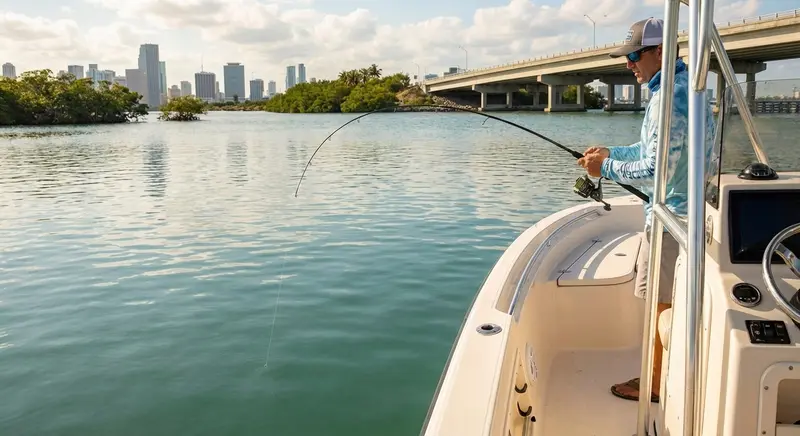
You don't need a center console or a guide to find jacks. Some of the best spots are visible from downtown. Bridges, channels, grass edges - anywhere bait stacks up, jacks aren't far behind. The beauty of inshore fishing in Miami is that it's accessible, but only if you know where to look.
Biscayne Bay holds schools near structure and flats, especially around tidal flow. Government Cut funnels bait through deep channels and draws in hungry predators. The Miami River mouth and adjacent docks create ambush zones during tide changes.
Inlets and canals offer current breaks and cover that jacks use to stage. Mangrove edges and seawalls provide shade and structure for cruising fish.
Jacks move with the bait. Mullet schools, pilchard pods, glass minnows - wherever the forage goes, the jacks follow. Early mornings and late afternoons see the most surface activity, but don't sleep on midday fishing when bait is thick. Tidal movement matters more than time of day.
Gear That Won't Let You Down
You can't muscle a big jack with light tackle in tight water. These fish hit hard, run fast, and head straight for the nearest piling or rock pile. Your setup needs to handle sudden violence without folding.
Medium-heavy spinning or baitcasting rigs are the standard. Braided line in the twenty to thirty-pound range gives you the strength and sensitivity you need. Pair that with a heavy fluorocarbon or wire leader - jacks have sandpaper mouths and sharp gill plates that'll shred mono in seconds. Keep your drag smooth and your hooks sharp, because anything less just feeds fish.
Methods That Produce Bites
Jacks aren't picky, but they do respond to presentation. Match the bait, work the structure, and be ready for chaos. Here's what consistently puts fish on the line.
Live bait like mullet or pilchards free-lined near cover triggers instinctive strikes. Topwater plugs create surface commotion that jacks can't resist, especially in low light. Spoons and swimbaits mimic fleeing baitfish and work well in current.
Fly fishing with large streamers offers a challenge for anglers who want to earn it. Vertical jigging around bridges and pilings pulls fish out of deeper holding zones.
When a jack hits, there's no subtlety. The rod loads, the drag screams, and you're in a fight. Keep pressure on them, but don't horse them - that's how you pull hooks or snap leaders.
Let the drag do its job and stay patient, since most lost fish come from panic, not bad luck. Anglers who like vertical presentations should try our jigging charters in Miami, since jacks respond aggressively to a jig worked through deeper holding zones.
Why Jacks Deserve Your Attention
Some people skip jacks because they're not glamorous. They're not snook, they're not tarpon, they're not redfish. But anyone who's fought a twenty-pound crevalle in shallow water knows the truth - these fish are pure adrenaline. They strike with aggression, fight with power, and don't quit until they're at the boat.
They're also perfect for catch and release. Most anglers don't keep them - the meat's strong and not everyone's taste - so the population stays healthy. That means consistent action, year after year, without the pressure that comes with more sought-after species. You can fish for jacks hard and still leave plenty behind.
A few habits separate a good day from a frustrating one. Track the bait schools, because jacks are never far from mullet or pilchards. Stay mobile and cover water instead of sitting on one spot too long. Use strong knots, check your leader after every fish, and watch for surface activity, diving birds, or nervous bait pushing water.
The Verdict From the Shallows
Big jacks in Miami's inshore waters aren't a myth or a fluke. They're here, they're hungry, and they'll test every piece of gear you bring. You don't need a long run or a deep drop. You just need to show up with the right setup, find the bait, and be ready when the rod doubles over.
This isn't about chasing legends offshore. It's about recognizing what's already in front of you. Once you've felt a crevalle jack rip line in shallow water, you'll understand why so many anglers keep coming back.
For guided action, our live bait and kite fishing techniques work well on jacks. Families wanting to introduce children to this fishery can book a relaxed kids fishing charter. Browse the full lineup of Miami fishing charter options and rates to match a trip to your group.
Ready to feel one of these fights for yourself? Plan your Miami inshore charter with Capt. Orly, or call 786-266-0171 to lock in your date.
Frequently Asked Questions
What is the biggest jack you can catch inshore in Miami?
Crevalle jacks average five to twenty pounds in Miami inshore waters, but every season someone hooks a forty-pounder around bridges and channels. Targeting them with proper gear on our Miami inshore charters gives you a real shot at a trophy-class fish.
What gear do I need to land a big crevalle jack?
Use a medium-heavy spinning or baitcasting rig, twenty to thirty-pound braid, and a heavy fluorocarbon or wire leader. Jacks have sandpaper mouths and sharp gill plates, so a smooth drag and sharp hooks matter as much as the rod.
Are jacks good to eat or strictly catch and release?
Most anglers release them. The meat is strong-flavored and not to everyone's taste, which keeps the population healthy and the action consistent. Quick handling and a careful release protect the fishery for next season.
When is the best time of day to target jacks?
Early mornings and late afternoons see the most surface activity, but tidal movement matters more than the clock. When bait is thick, midday can produce hard strikes too. Wherever the mullet and pilchards stack up, the jacks follow.