Local Fishing Spots
Fishing for Tarpon in Miami Urban Waterways
By Nomad Fishing Charters | September 9, 2025 · 8 min read
Tarpon in the Shadow of the City
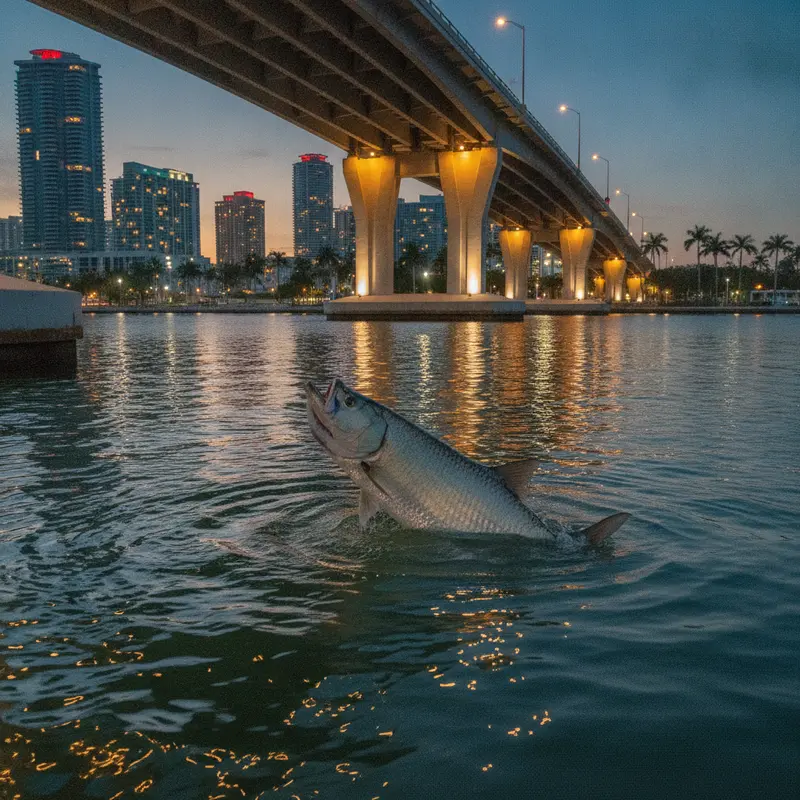
Tarpon show up where the city is busiest. They're not hiding in the mangroves or out on the flats. They're right under the bridges, next to seawalls, and in the glow of dock lights. Every night, you'll see them rolling just feet from the street. Locals skip the open water and head straight for the concrete. That's where the real action happens.
Where Tarpon Wait
Not every stretch of water holds giants, but some places always deliver. Government Cut offers deep edges, swirling current, and bait stacked tight. At the Port of Miami bridge pylons, tarpon pin mullet against the concrete legs. Biscayne Bay dock lights draw shrimp and glass minnows that pull fish in after dark.
The Julia Tuttle Causeway holds rolling fish along its shadow lines at sunrise. The MacArthur Causeway gives up current breaks, eddies, and ambush points. At Haulover Inlet, tide swings bring fresh bait and hungry tarpon.
These tarpon hotspots aren't secrets. They're battlegrounds. Bait piles up, predators close in, and the city's pulse runs through every cast.
The fish don't care about the skyline. They want food and cover. Anglers who understand the flow of these places see more action, plain and simple. Many of these spots sit just off Downtown Miami, minutes from the dock.
When the Bite Turns On
Timing isn't a guessing game. Spring migration starts in March. Water warms above 75, and the first big schools show up. April through June, the city fills with giants.
Locals mix with fresh arrivals, and the action peaks. But Miami doesn't shut down in winter. Tarpon stay all year, and when northern waters chill, Miami's tarpon fishing keeps rolling.
Night fishing from November to February? Dock lights turn on, shrimp drift by, and smaller fish hammer baits until sunrise. The fights stay wild and the crowds thin out.
Locals know the best nights come when the wind drops and the tide swings. You don't need a calendar. Just watch the water and listen for the roll.
Structure Changes Everything
Tarpon in the city don't act like their backcountry cousins. They use every inch of man-made cover. Bridges, docks, seawalls: these aren't obstacles. They're tools. Fish slide behind pilings, wait in the dark, and ambush anything that drifts too close. Targeting tarpon near structure takes precision. You can't just toss a bait and hope. The boat needs to sit up-current. Baits must drift naturally, right into the strike zone. When a tarpon rolls, you react. No second chances. Miss the window, and the fish disappears under the bridge.
- Keep baits moving with the current.
- Stay alert, since tarpon hit fast and run for cover.
- Use the structure to your advantage, not theirs.
Every bridge and dock has its own rules. Some fish hold tight to pilings. Others cruise the shadow lines. The best anglers read the water, adjust on the fly, and never get lazy with their presentations. Our crew knows how to position the boat and present baits where the fish are most likely to strike - the kind of precision our tarpon fishing charters in Miami are built around.
Reading the Tides
Tarpon don't feed all day. The two hours around tide changes bring the most action. Incoming water pushes bait toward structure. Outgoing current lines up predators along deep edges. Inshore fishing success comes from matching your approach to the water's movement. Fish the slack, and you'll wait all night. Hit the window, and the bite can turn on in seconds.
- Incoming tide: focus on bridge shadow lines and dock lights.
- Outgoing tide: work deeper channels and current seams.
- Watch for rolling fish, since they show you where to cast.
Some nights, the bite lasts ten minutes. Other times, it stretches for hours. The only way to know is to be there, rod in hand, ready to move when the water does. We've spent countless nights learning these patterns so our guests can enjoy the best windows of action. These urban patterns hold across Brickell and the causeways that ring the bay.
Gear That Handles the City
Light tackle makes every fight count, but city tarpon don't play fair. They run for pilings, wrap lines around dock cables, and test every knot. We use 30-40lb braid for strength and control. Leaders run 60lb fluorocarbon, enough to handle rough mouths and sharp edges. When live baiting with mullet or threadfin, circle hooks in 5/0 to 7/0 sizes do the job. They set clean, hold strong, and let you release fish without damage.
- Reels need smooth drags, since tarpon surge hard and fast.
- Rods need backbone, because city fish don't give you room to play.
- Always check knots and leaders, since structure shreds weak gear.
Every hookup is a test. The fish jumps, the line screams, and the city lights blur in the background. Lose focus, and you lose the fish. Stay sharp, and you'll land giants where most people see only traffic and concrete. Our gear is selected specifically for these urban battles, so you can focus on the fight, not the equipment.
Book Your Miami Tarpon Trip
Ready to battle silver kings in the shadow of the city? Nomad Fishing Charters puts you on the fish with specialized tactics refined through years of urban tarpon success. Call 786-266-0171 to reserve your spot, or compare trip options on our charters and rates to plan your night on the water.
Frequently Asked Questions
Where can you catch tarpon in Miami's urban waterways?
Government Cut, the Port of Miami bridge pylons, Biscayne Bay dock lights, the Julia Tuttle and MacArthur Causeways, and Haulover Inlet all hold fish. These spots concentrate bait and current, and many sit minutes off Downtown Miami.
When is the best time of year for Miami tarpon?
Spring migration peaks April through June when giants fill the city waters. Tarpon stay year-round, though, and night fishing from November to February under dock lights stays productive when the wind drops and the tide swings.
What gear do you use for urban tarpon fishing?
We run 30-40lb braid, 60lb fluorocarbon leaders, and circle hooks in 5/0 to 7/0 sizes for clean sets and healthy releases. Reels need smooth drags and rods need backbone, because city tarpon run straight for pilings and dock cables.
Why does tide matter so much for tarpon?
The two hours around a tide change bring the most action. Incoming water pushes bait toward structure and outgoing current lines predators along deep edges. Matching your live bait presentation to the moving water is the difference between a slow night and a hot bite.